Introduction
Acrylic paints are one of the most versatile modern art mediums. They offer fast drying times, strong adhesion, and flexible film strength that make them ideal for canvas, mixed media, and contemporary techniques. This guide explores the evolution of acrylic materials, how polymer colors work, and best practices for using them effectively.
The History and Evolution of Painting Materials
The development of Western art shows a consistent pattern: as artistic ideas evolve, the need for new materials follows. For centuries, egg tempera defined the luminous, detailed style of painters such as Giotto and Botticelli. As artistic goals shifted, painters experimented with oil additives and layering techniques to achieve effects tempera could not produce.
The introduction of linseed oil, varnishes, and volatile solvents led to the rise of oil painting as the dominant medium. Artists like Giovanni Bellini transitioned from tempera to hybrid methods and eventually to full oil painting, illustrating the natural evolution of materials shaped by creative needs.
In the 20th century, industrial chemistry introduced new synthetic binders and coatings. These innovations influenced nearly every modern movement and expanded the range of textures, drying times, and effects available to artists today.
cPolymer Color (Acrylic Paint)
What Are Polymer Colors?
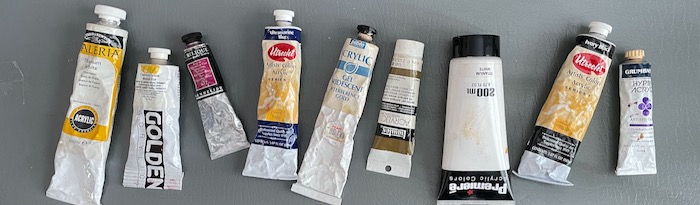
Polymer colors—commonly known as acrylic paints—are created by dispersing pigments in an acrylic emulsion. They are thinned with water, but once dry, the resin particles form a durable, flexible film that resists water and environmental stress.
Advantages of Acrylic Paints
Acrylic paints offer several benefits for artists:
Fast drying time for efficient workflow
Easy cleanup using water instead of solvents
Low toxicity and minimal odor
Ability to achieve matte, semi-matte, or gloss finishes
Strong adhesion and long-term flexibility
Suitable for canvas, wood panels, paper, and mixed media
Acrylics vs. Oils
While acrylics are extremely versatile, they do not replace oil paints entirely. Oil colors offer unique blending capabilities, slow drying times, and subtle transitions that acrylics cannot fully duplicate. Acrylics, however, are ideal for rapid layering, textured applications, and expressive techniques that benefit from fast drying.
Working With Acrylics
Pigments and Compatibility
Acrylics use many of the same pigments found in oils and watercolors. Some pigments are naturally incompatible with the alkaline properties of acrylic binders, though modern manufacturers often modify these pigments to ensure stability.
Using Acrylics With Other Media
Acrylic paints remain flexible over time, which helps prevent cracking. However, applying acrylics over oil paint is not recommended, as the two layers do not bond well. Oils can safely be used over fully dried acrylic layers, making acrylics a suitable base for mixed-media approaches.
Techniques
The principal difference between handling polymer colors and handling watercolor or gouache is due to the very rapid loss of solubility of polymer colors after application; in this respect they resemble tempera and casein colors. The great difference between the way they handle as compared to oil colors is simply due to the fact that they are water-miscible paints and therefore share the manipulative qualities and the advantages and shortcomings ot aqueous media rather than those of oil paints.
Polymer color dries rapidly to an insoluble film which can be dissolved from palette and brushes only with powerful liquids of the lacquer-solvent type. To avoid such difficulties, the painter rests the brushes in a jar or can of water while painting, to keep them from drying, and uses a plate glass table-top palette which is readily cleaned by scraping with a razor blade.
Other Polymer Materials. In addition to a complete line of colors, the following adjuncts are usually included in each manufacturer's line.
Polymer primer (also called polymer gesso) is made of titanium white and perhaps inert pigment, dispersed in the same polymer vehicle as is contained in the colors, but compounded to a stiffer consistency; the primer is used to prepare painting grounds on panels or canvas. It is sold in round, flat cans with broad replaceable caps. Some confusion has resulted from the unfortunate habit American manufacturers have of labeling polymer primer
"gesso" in large type, for it is not really gesso at all and will not serve all the purposes of that material, being completely nonabsorbent, whereas true gesso has full absorbency, a property that is essential for tempera painting, water gilding, and other uses. Gesso has been a specific term for glue-chalk mixtures for more than five centuries, and it continues to be so used. The fine print over the word "gesso" on the label actually makes it read "polymer gesso" or "—brand gesso"; nevertheless, the confusion persists.
Polymer mediums: two milky-white fluids sold in bottles, regular and mat.
The regular or gloss type is identical with the vehicle used in the colors; it is added to the color when it is desired to maintain strength and uniform gloss as it is thinned with water. The mat type is used to create a dull finish and is also useful as a final or protective coating when a dull or reduced gloss effect is wanted. In general, in order to ensure a uniform finish, it is advisable to use the mat type only in final overpainting rather than in underpaintings, because spotty effects are sometimes produced when a clear or unpigmented coating is applied over a surface that has some areas in which the dull medium was used. The dull effect is produced by the addition of a flatting agent, usually an inert pigment of the diatomaceous type, such as Celite.